

Key Takeaways
- Charlotte is one of the Southeast’s most active freight markets, sitting at the crossroads of I-85 and I-77.
- Truck drivers in North Carolina earn between $50,000 and $70,000 annually. (BLS, 2024)
- A Class A CDL is the standard credential for the highest-paying trucking jobs in the Charlotte area.
- Federal ELDT requirements mean CDL candidates must complete training through an FMCSA-registered school before taking the skills test.
- Most CDL training programs in Charlotte can be completed in four to six weeks through a full-time schedule.
Choosing a career is a big decision. It means considering job security, earning potential, and wondering whether the work will still be in demand five or ten years from now. Truck driving is a skilled trade with a clear, quick licensing process, competitive wages, and consistent demand. It is the kind of work that supports a household and builds a career over time, not just a job that draws a wage.
This guide covers what it takes to start a truck driving career in Charlotte, NC, from earnings and job market conditions to the CDL licensing process and what to look for in a training program.
Is Truck Driving a Good Career in Charlotte, NC?
Yes. Charlotte is one of the Southeast’s largest freight hubs, and demand for licensed CDL drivers consistently outpaces supply. Drivers in North Carolina earn competitive wages from day one, with significant room to grow as they build experience and add endorsements.
Trucking does not require extensive schooling. Earning a Commercial Driver’s License (CDL), through a structured training program and a state-administered skills test, gets you road ready quickly compared to careers that require a four-year degree. Charlotte metro’s position along two major interstate corridors creates year-round demand for commercial drivers at all experience levels.
How Much Do Truck Drivers Make in Charlotte, NC?
According to the Bureau of Labor Statistics (BLS), the median annual wage for heavy and tractor-trailer truck drivers nationally was $57,440 in May 2024. In North Carolina, average wages range from approximately $50,000 to $70,000 or more, depending on experience, route type, and specialization.
| $57,440 | $50K–$70K+ | $78,800+ |
| National median / Heavy truck drivers | Typical NC range / by experience & route | Top 10% nationally / Heavy truck drivers |
Source: U.S. Bureau of Labor Statistics, Occupational Outlook Handbook — Heavy and Tractor-Trailer Truck Drivers, May 2024
Several factors influence where a driver lands within that range:
- Route type: OTR drivers typically earn more than local drivers due to longer time away from home
- Endorsements: HazMat, tanker, and doubles/triples endorsements command higher pay from many employers
- Carrier type: National carriers, regional fleets, and owner-operators each structure compensation differently
- Experience: Entry-level wages are lower; pay typically climbs within the first two years on the road
- Home time preference: Local and regional routes often pay slightly less per mile than OTR, but offer daily or weekly home time
Why Does Charlotte Have a Strong Demand for CDL Drivers?
Charlotte is North Carolina’s largest city and a regional anchor for logistics, manufacturing, distribution, and e-commerce. Its position at the crossroads of I-85, I-77, and I-485, combined with proximity to major ports and rail connections, makes it one of the Southeast’s most active freight markets.
- I-85 connects Charlotte directly to Atlanta (southwest) and Richmond (northeast), two of the most active freight destinations in the eastern U.S.
- I-77 links Charlotte to Columbia, SC, and the industrial regions of western Virginia and Ohio
- Charlotte Douglas International Airport generates significant air cargo volume that flows into ground transportation networks
- The Charlotte metro is home to a large and growing number of distribution centers, fulfillment operations, and manufacturing facilities
- Rail connections to the ports of Savannah, GA, and Charleston, SC, support strong intermodal freight demand
- Population growth in the Charlotte metro continues to drive increases in local and regional freight volume
The result is a consistent job market for CDL holders at all levels, from local delivery routes to long-haul OTR work.
What Does Getting a CDL in North Carolina Involve?
Getting a CDL in North Carolina requires passing a written knowledge test for a Commercial Learner’s Permit, completing federally required ELDT training, passing a DOT physical, and passing the CDL skills test. Check out our full step-by-step guide.
Basic CDL requirements for North Carolina:
- At least 18 years old (21 for interstate/OTR driving)
- Valid North Carolina driver’s license
- Pass the NCDMV CDL knowledge test to receive a Commercial Learner’s Permit (CLP)
- Hold the CLP for a minimum of 14 days before the skills test
- Complete CDL training through an FMCSA-registered provider
- Pass a DOT physical examination
- Pass the CDL skills test: pre-trip inspection, vehicle control, and on-road driving
Term to Know: ELDT
Entry-Level Driver Training (ELDT) is a federal requirement set by the FMCSA. All first-time CDL applicants must complete training through a school listed on the FMCSA Training Provider Registry (TPR) before scheduling the CDL skills test.
Term to Know: DOT Physical
A Department of Transportation physical is a required medical exam conducted by a certified examiner on the FMCSA National Registry. A passing exam is valid for up to 24 months.
Which Commercial License Is Right for You?
A Class A CDL opens the widest range of commercial driving jobs, including tractor-trailer and most high-paying freight positions. A Class B CDL covers straight trucks, buses, and specialty vehicles. For most people pursuing a trucking career in Charlotte, Class A is the standard starting point.
| Feature | Class A CDL | Class B CDL |
| Vehicle Type | Tractor-trailers, semi-trucks, flatbeds, tankers, combination vehicles | Straight trucks, buses, dump trucks, delivery vehicles |
| Weight Requirement | GCWR over 26,001 lbs; towed unit over 10,000 lbs | Single vehicle over 26,001 lbs |
| Typical Jobs | OTR, regional, long-haul, intermodal, flatbed freight | Local delivery, transit, refuse collection, construction |
| Earning Potential | Higher median wages industry-wide | Competitive for local and regional routes |
| Can Also Drive Class B? | Yes, with appropriate endorsements | Class B vehicles only |
What CDL Endorsements Are Worth Getting in the Charlotte Market?
Endorsements expand what a CDL holder can legally haul or operate. In the Charlotte freight market, HazMat, tanker, and doubles/triples endorsements are often linked to higher pay. Each requires passing an additional written test through the North Carolina Department of Motor Vehicles (NCDMV).
| Endorsement | Code | What It Covers | Additional Requirement |
| HazMat | H | Transporting hazardous materials | TSA background check required |
| Tanker | N | Operating tank vehicles (liquids or gases) | Written knowledge test |
| Doubles/Triples | T | Pulling double or triple trailers | Written knowledge test |
| Passenger | P | Commercial passenger transport | Written test + skills test |
| School Bus | S | Operating a school bus | Passenger endorsement required first |
| HazMat + Tanker | X | Combined HazMat and tanker operations | TSA check + written test |
Source: FMCSA CDL Endorsements | NCDMV
Local, Regional, or OTR: What Type of Trucking Job Fits Best?
| Type | Typical Range | Home Time | Pay Structure |
| Local | Within a defined metro radius | Daily | Hourly or per-mile; typically lower per-mile rate |
| Regional | Multi-state area (e.g., Carolinas, Southeast) | Several times per week | Mileage + bonuses; mid-range earnings |
| OTR | Nationwide routes | Days or weeks away | Higher per-mile rate; bonuses and per diem common |
Source: BLS — Heavy and Tractor-Trailer Truck Drivers
The range of employers in the area means new CDL holders have real options for matching route type to their lifestyle priorities. Charlotte-area CDL holders may find driving jobs including:
- Dry van
- Flatbed
- Refrigerated (reefer)
- Tanker
- Intermodal drayage
- Local delivery
How Do You Choose a CDL School in Charlotte?
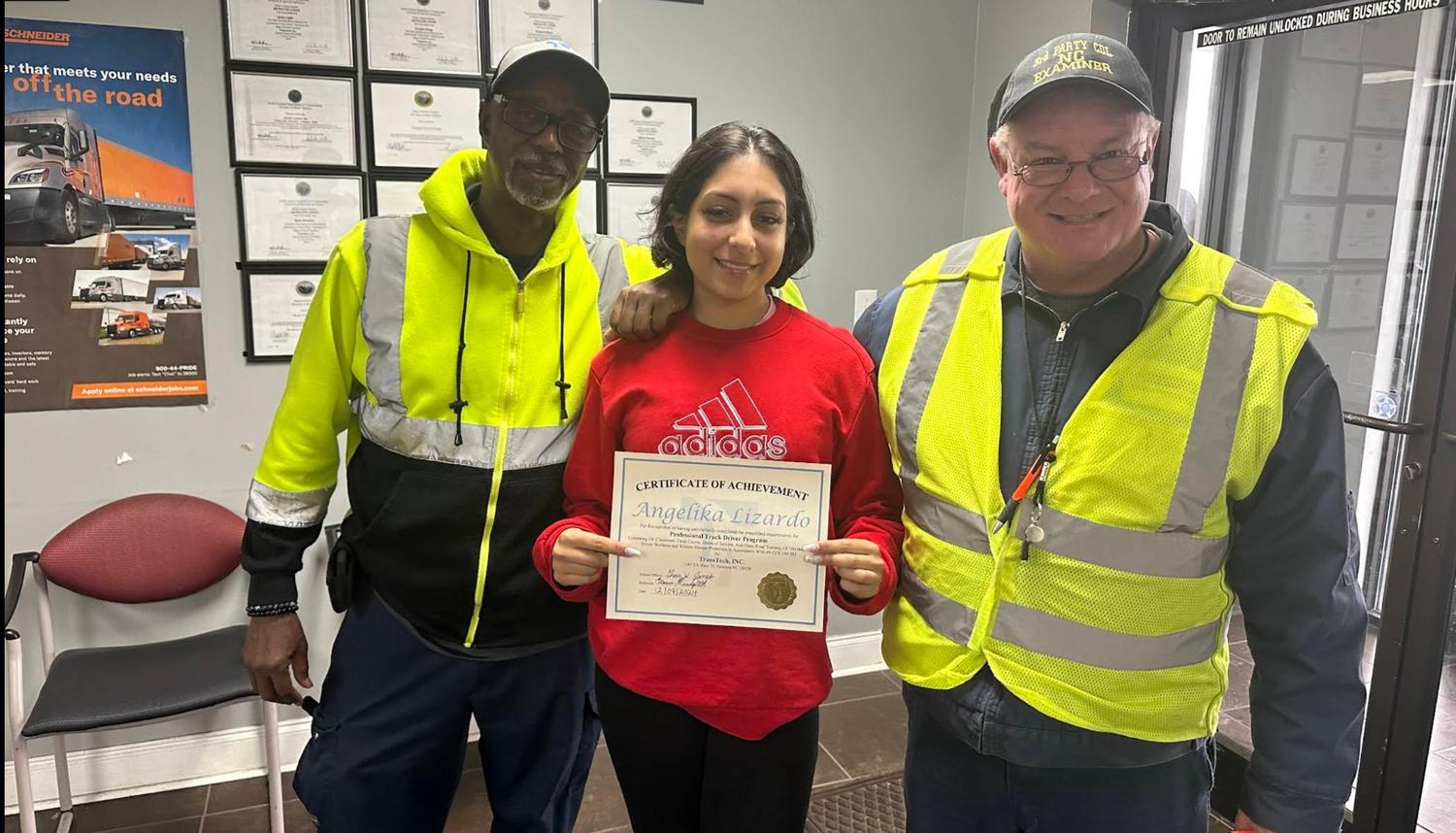
Students must complete training at FMCSA-registered schools to be eligible to take the CDL skills test. Beyond that, evaluate hands-on training time, equipment quality, instructor credentials, and job placement support.
Before enrolling in any CDL program you should ask these questions:
- Is the school listed on the FMCSA Training Provider Registry?
- How many hours of behind-the-wheel training are included?
- What equipment is used, and does it match what employers operate?
- Does the school offer on-site CDL skills testing?
- What job placement support is available after graduation?
- Are financing options, VA benefits, or employer tuition reimbursement available?
Conclusion
Charlotte is full of opportunity for truck drivers. The city’s growing freight infrastructure and consistent demand from distribution, manufacturing, and intermodal operations make it one of the better markets in the Southeast to launch a commercial driving career.
The path to a CDL is clear and achievable, and drivers have many employment options: local routes, regional runs, or long-haul OTR work, with wages that reflect the skill and responsibility of the job. The Bureau of Labor Statistics projects 4% employment growth for heavy truck drivers through 2034, with roughly 237,600 job openings expected annually.
For anyone considering a career change or seeking well-paying, in-demand work, trucking is worth a serious look. The first step is to find a training program that prepares drivers to pass the CDL skills test and enter the job market ready to work.
Get Started with a Trucking Career in Charlotte
TransTech Charlotte offers Class A and Class B CDL training with flexible schedules, on-site skills testing, and job placement support. Classes begin every Monday.
Frequently Asked Questions
What does a DOT physical involve?
A DOT physical must be performed by a certified examiner on the FMCSA National Registry. A passing exam is valid for up to 24 months. The exam evaluates:
- Vision (20/40 in each eye with or without correction)
- Hearing
- Blood pressure
- Cardiovascular health
- Neurological function
- Urinalysis
How long does it take to find a job after getting a CDL in Charlotte?
Most new CDL holders find employment within a few weeks of passing the skills test. Charlotte’s freight market supports strong demand, and many CDL training programs include job placement assistance or employer connections. Some carriers begin the hiring process before a student has finished training.
Can I get a CDL in North Carolina with a prior traffic violation?
It depends on the violation. The FMCSA lists specific disqualifying offenses, including DUI convictions and certain drug-related offenses, that can permanently or temporarily prevent CDL issuance. Minor traffic violations generally do not disqualify an applicant.
How long is a Commercial Learner’s Permit valid in North Carolina?
A CLP is valid for 180 days from the date of issue. If the CDL skills test is not completed within that window, the applicant must reapply and retake the knowledge tests. If the CLP expires and more than 30 days pass before renewal, all written exams must be retaken from the start.
How much does CDL training cost in North Carolina?
Tuition varies by school and program format, typically ranging from a few thousand dollars to over $10,000. Options to reduce out-of-pocket costs include employer-sponsored training (some carriers pay tuition in exchange for a driving commitment), VA benefits for eligible veterans, workforce development grants, and school financing plans.
