

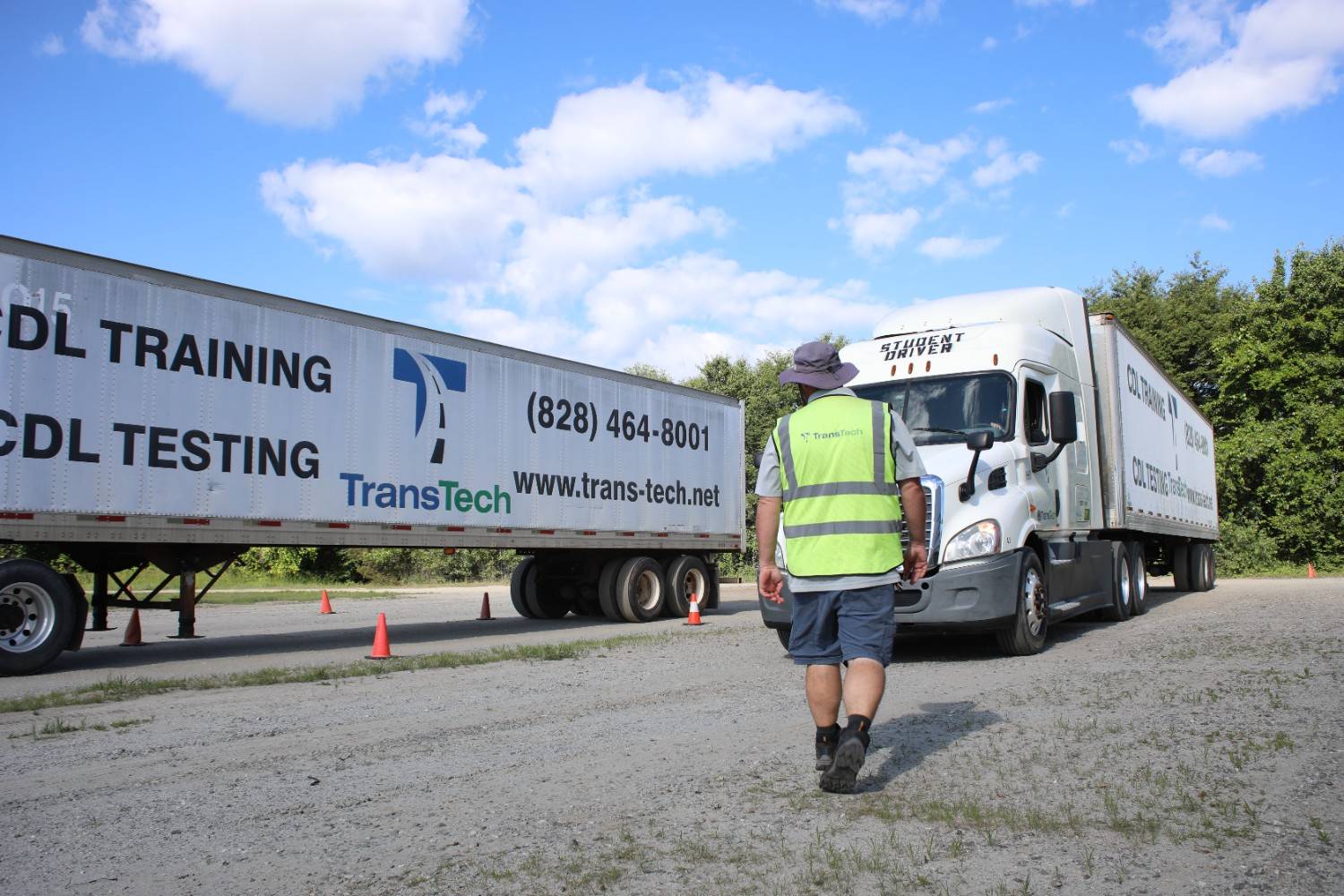
Atlanta is one of the busiest freight hubs in the country. Atlanta’s Metro area holds close to 300 million square feet of warehouse and distribution space, making it the sixth largest logistics market in the United States. Graduates of TransTech’s Atlanta campus are entering a local job market that needs drivers right now, not one they have to hope opens up spots for them later.
Why Atlanta Needs More CDL Drivers
Atlanta sits at the crossroads of I-75, I-85, I-20, and I-285, some of the busiest commercial routes in the country. According to the Georgia Department of Economic Development, Georgia’s interstate network lets a truck in Atlanta reach more than 80 percent of the U.S. market with just a two-day truck drive. Distribution centers, warehouses, and shipping companies all rely on Atlanta’s central position in its impressive road network to move goods through the metro area and across the Southeast quickly.
On top of the consistently bustling commercial routes, Atlanta’s population has been growing fast. The region is home to about 6.4 million residents and has grown by roughly 330,000 people since 2020. An increase in population means more goods moving through stores, warehouses, and homes, and that keeps local freight volume climbing. Local demand rising opens up opportunities for local driving work, so people who want to avoid long-distance jobs will have choices after they get their CDL.
Aside from roads and warehouses, Atlanta also connects to two other major transportation hubs: Savannah and the Hartsfield-Jackson Atlanta International Airport (ATL). Savannah, about 250 miles away, is the fastest growing port in the country and holds the largest single container terminal in North America. Much of the freight that arrives there moves inland by truck and rail through Atlanta on its way to stores and warehouses across the Southeast. Hartsfield-Jackson Atlanta International Airport (ATL), the world’s busiest airport, also moves more than 650,000 metric tons of air cargo a year, and that freight needs trucks to finish the trip.
What Graduates Can Expect After Training
TransTech’s Class A CDL program takes as little as four weeks to complete, and most graduates start a career sooner than they expected. National carriers such as Werner Enterprises, which runs two terminals in the Atlanta area, along with Swift, Knight Transportation, Schneider National, Stevens Transport, and TMC Transportation all recruit drivers straight out of the Atlanta program. TransTech’s job placement team works directly with carriers, connecting graduates with open positions during and after training. Many students line up a job before they even finish their coursework.
Grads can focus on training during their CDL program and know that work is waiting once they’re licensed.
What Graduates Can Earn
Pay depends on the route and the carrier, but the numbers in Atlanta are strong for entry-level work. According to the U.S. Bureau of Labor Statistics, heavy and tractor-trailer truck drivers in metro Atlanta earned a mean annual wage of $59,400 in May 2025, above the national mean. New drivers typically start closer to the entry-level range, often between $50,000 and $70,000 a year. Drivers who take on longer regional or over-the-road routes often earn between $70,000 and $90,000, with mileage playing a big part in that range. After a few years of experience, and maybe some added endorsements like hazmat or tanker, a driver’s pay can push past $90,000, with some reaching six figures.
Atlanta also employs more truck drivers relative to its size than most of the country. The metro area has about 42,000 heavy and tractor-trailer truck drivers, a concentration about 9 percent higher than the national average, according to BLS data. That concentration shows how much the local economy depends on freight, meaning that the need for new drivers will stay steady for a long time.
A Career with Room to Grow
Trucking is not a dead-end job. Transportation and material moving jobs make up close to 11 percent of all employment in metro Atlanta, well above the 8.8 percent national average, so there is a large local network of related roles to move into. Drivers who stay in the field can move into specialized freight, regional routes closer to home, or training and safety roles that help bring new drivers up to speed.
For someone in the Atlanta area looking for a career that starts fast and keeps paying off, few options beat CDL training. TransTech’s Atlanta campus gives students the license, the hands-on skills, and the employer connections needed to start a career, all in one of the country’s biggest freight markets.
Frequently Asked Questions
Is now a good time to start a trucking career in Atlanta?
Yes. Atlanta sits at the junction of several major interstates and holds close to 300 million square feet of warehouse space, and that keeps demand for CDL drivers strong.
How much can a new CDL driver earn in Atlanta?
Heavy and tractor-trailer truck drivers in metro Atlanta earned a mean annual wage of $59,400 in May 2025, and many new drivers start between $50,000 and $70,000 in their first year.
Which carriers hire CDL graduates in the Atlanta area?
National carriers such as Werner Enterprises, Swift, Knight Transportation, and Schneider National all recruit drivers out of the Atlanta area, among others.
Does the Port of Savannah affect trucking jobs in Atlanta?
Yes. Much of the freight that arrives at the Port of Savannah, one of the fastest-growing ports in the country, moves inland through Atlanta by truck and rail.
Ready to start a career with strong pay and fast demand? Request more information about TransTech’s Atlanta CDL training and get connected with an admissions team member today!
