

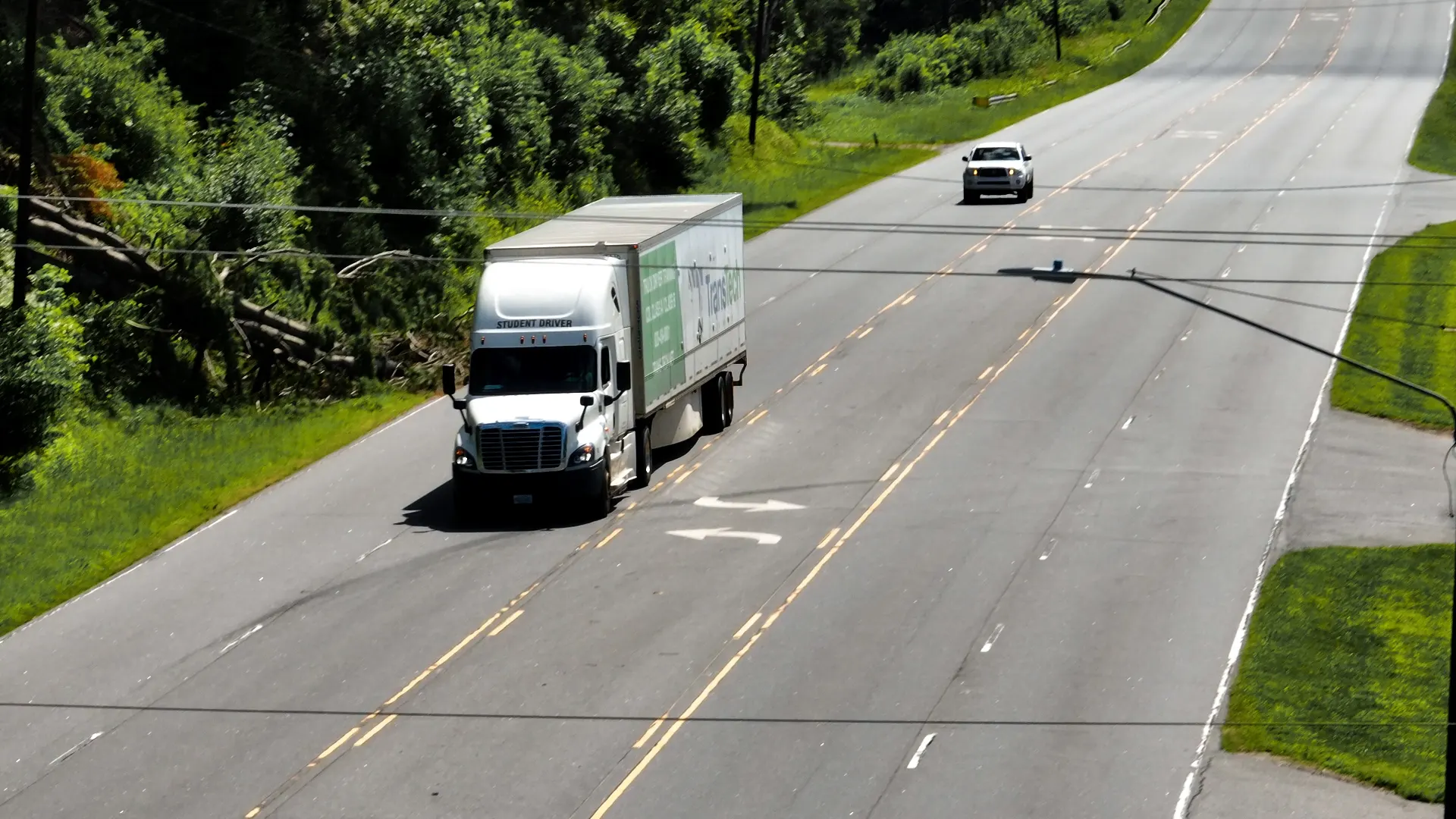
The main difference between OTR and local trucking is distance and time spent at home. Over-the-road (OTR) drivers haul freight across many states and stay out for weeks at a time. Local drivers stay close to one area and go home almost every night.
That one difference shapes almost everything else about the job: how drivers get paid, how they live, how easy it is to get hired, and which license they need.
For students in CDL training, the choice between OTR and local work is one of the first big career decisions. Each path comes with real trade-offs, and learning them early helps new drivers know what to expect before they apply to fleet jobs.
Typical Routes for OTR and Local Drivers
OTR drivers run long-haul routes that can cover the whole nation. A single load may travel 1,000 miles or more, and drivers often stay on the road for two to three weeks before heading home.
Local drivers work within a set area around their home terminal, often within about 150 miles. Common local jobs include grocery and retail delivery, moving freight between warehouses, driving dump trucks, and driving in ports or rail yards.
| OTR | Local | |
| Area covered | Many states, often coast to coast | One specific area, about 150 miles |
| Time on the road | 2 to 3 weeks at a time | One shift |
| Typical home time | A few days every few weeks | Most nights |
| Common freight | Dry van, refrigerated, flatbed | Store delivery, LTL, dump, tanker |
Pay Structure Differences
OTR and local drivers are usually paid differently. OTR drivers are most often paid by the mile, known as cents per mile (CPM). The more miles they drive in a week, the more they earn. Some OTR jobs also pay a percentage of each load.
Local drivers are most often paid by the hour. However, some local jobs pay by the stop, by the load, or a set daily rate. Hourly pay gives local drivers steadier checks, since traffic and waiting at docks still count as paid time.
In terms of yearly earnings, OTR drivers often earn more because they log more miles. Local pay is often lower because more drivers want jobs that let them sleep at home. Local drivers also spend less on meals and showers on the road, which narrows the gap in take-home pay.
Actual pay depends on more than route type. Many carriers start new drivers at a lower rate, then raise it as drivers build safe miles and time on the job. The type of freight matters too, since flatbed, refrigerated, and tanker loads often pay more than standard dry van freight because they take extra skill and care.
Endorsements such as hazmat or tanker can raise a driver’s rate on both OTR and local routes. Location also plays a role, because pay for the same job can change from one state or city to the next. Many carriers also offer sign-on bonuses, safety bonuses, and extra pay for added stops or layovers.
Lifestyle Differences
OTR drivers live in their trucks for weeks at a time. They sleep in the sleeper berth, eat at truck stops, and plan around federal hours-of-service limits. Some enjoy the independence and the chance to see the country, while others find a life on the road difficult.
Local drivers keep a routine that looks more like a typical job. They start and end each shift at the same terminal and sleep at home. The trade-off is often an early start, heavy traffic, and more physical work. Many local jobs require drivers to load or unload freight, use a hand truck, or make many stops in one day.
How Hard Is It to Get Hired?
OTR jobs are usually the easiest for new CDL graduates to land. Many large carriers hire drivers straight out of school and pair them with a trainer for their first few weeks. These companies often recruit directly from CDL schools.
Local jobs can be harder to get at first compared to OTR jobs. Because so many drivers want to be home each night, local employers can be choosy. Many require one to two years of experience, a clean driving record, and sometimes extra endorsements.
Local work isn’t impossible to find for new drivers. Entry-level openings exist with delivery companies, less-than-truckload (LTL) carriers, and Class B jobs like driving dump trucks or box trucks.
A path some new drivers choose is to start in an OTR position, build a safe record for a year or two, and then move to a local job.
Which CDL Prepares Drivers for Each Role?
A Class A CDL opens the most doors in the trucking industry. It allows drivers to operate tractor-trailers and other combination vehicles, which prepares them for nearly all OTR jobs. Class A holders can also take local jobs, so this license keeps every option open.
A Class B CDL covers single vehicles such as dump trucks, box trucks, garbage trucks, and buses. These jobs are almost always local. Class B can be a good fit for drivers who want to be home every night, but it does not qualify drivers to operate a tractor-trailer.
Endorsements can raise pay and widen job choices for any kind of trucking. Common ones include:
- Hazardous materials (H): for hauling fuel, chemicals, and other regulated loads.
- Tanker (N): for hauling liquids in bulk.
- Doubles and triples (T): for pulling more than one trailer, common in LTL freight.
All new drivers must complete Entry-Level Driver Training (ELDT) from a provider listed on the FMCSA Training Provider Registry before taking the CDL skills test.
Conclusion: Choosing Between OTR and Local Trucking
OTR and local trucking are both great career pathways for truck drivers, but the best option depends on the driver’s lifestyle and needs. OTR offers more miles, easier hiring for new drivers, and often higher yearly pay. Local trucking offers daily home time and a set routine, but often requires experience and more physical work.
The best choice depends on a driver’s goals, family needs, and how long they want to be on the road.
No matter which path a driver picks, it starts with the right training. Students can find a TransTech location near them or enroll in Class A CDL training to get started.
Frequently Asked Questions
Is local trucking better than OTR?
No, neither one is objectively better for everyone. Local trucking may be better for drivers who want to be home each night, while OTR may be better for drivers who want more miles and an easier start after CDL school.
Are regional and OTR the same thing?
No. Regional drivers stay in one part of the country (like the Southwest or the Great Lakes regions) and usually get home weekly, while OTR drivers cover many states and stay out for weeks.
Which pays more, OTR or local trucking?
For new drivers, OTR usually pays more per year because drivers log more miles. Some local jobs, especially those that need hazmat or tanker endorsements, can match or beat OTR pay.
What is the most profitable type of trucking?
For company drivers, specialized freight such as hazmat, tanker, oversized loads, and team OTR driving tends to pay the most. Owner-operators can earn more, but they also pay for fuel, insurance, and repairs.
Do OTR drivers have to drive alone?
No. Some OTR drivers work in teams of two, taking turns driving, which keeps the truck moving and often raises pay.
Do truck drivers get paid while waiting to load or unload?
Sometimes. Many carriers pay detention pay after a set wait time, often two hours, but each company sets its own policy.
How long does it take to get a Class A CDL?
At TransTech, full-time Class A programs take about four weeks. The part-time schedule takes about 8 weeks.
How long does it take to get a Class B CDL?
At TransTech, full-time Class B programs take about four weeks to complete.
