

What Is Over-the-Road Trucking?
Over-the-road (OTR) trucking is a category of trucking jobs that require hauling freight long distances, often across many states or regions of the country, with the driver living in the truck for days or weeks at a time. OTR drivers sleep in the truck’s sleeper berth, eat on the road, and go where the freight needs to go. A load picked up in Charlotte on Monday might end up in Dallas, then Denver, then Chicago before the driver heads home.
OTR is one of the three main types of truck driving, along with regional and local truck driving. It is also the most common first job for new drivers. Large national carriers hire new CDL graduates for OTR work because they have the freight, the trucks, and the training programs to support them.
OTR is not for everyone. It asks a lot of drivers and their families. But for the right person, it is one of the fastest ways to build experience, save and earn money, and open doors to other kinds of driving jobs.
What a Day at Work on the Road Looks Like
An OTR driver’s workday is shaped by federal law. The Federal Motor Carrier Safety Administration (FMCSA) sets hours-of-service rules that limit how long a driver can work before they stop to rest. An electronic logging device (ELD) in the truck tracks that time automatically.
The main rules for drivers hauling freight are:
- 11-hour driving limit: A driver may drive up to 11 hours after 10 hours in a row off duty.
- 14-hour window: A driver may not drive past the 14th hour after coming on duty. Fueling, waiting at docks, and inspections all count against this clock. So, if a driver comes on duty and drives for 9 hours total, spends 2 hours waiting at docks, has inspections for 2 hours, and spends another hour fueling, they must not continue driving.
- 30-minute break: A driver must take a 30-minute break after 8 total hours of driving.
- 60/70-hour limit: A driver may not drive after 60 hours on duty in 7 days, or 70 hours in 8 days. Taking 34 hours in a row off duty resets the count.
These rules are in place to make sure that drivers are not exhausted while behind the wheel. Fatigue and drowsiness are serious dangers when someone feeling them is behind the wheel of a semi-truck, so hours-of-service rules must be taken extremely seriously.
A typical day may start with a pre-trip inspection at 6:00 a.m., then a long stretch of highway driving, a break at a truck stop, an afternoon delivery or pickup, and a stop for the night. Drivers plan their routes, fuel stops, and parking ahead of time. Finding safe parking for the night is one of the skills new drivers learn fast.
OTR drivers also handle paperwork, check in with dispatch, and sometimes wait hours at a shipper or receiver. Waiting time is a common frustration point because the 14-hour clock keeps running.
How Much Do OTR Truck Drivers Make?
Most OTR drivers are paid by the mile, not by the hour. More miles means more money, which is why OTR jobs often pay more than local jobs for new drivers. Many carriers will also pay extra for things like waiting time at docks, extra stops, or days away from home. These extras vary by company, so drivers should ask about them before signing on.
The U.S. Bureau of Labor Statistics reports that the median annual wage for heavy and tractor-trailer truck drivers was $ $58,640 per year as of May 2025. That figure covers all route types.
Pay depends on the carrier, the freight, the miles a driver runs, and the driver’s safety record. A driver who keeps the truck moving and avoids accidents and violations will usually be on track to earn more over time.
The Tradeoffs of OTR Life
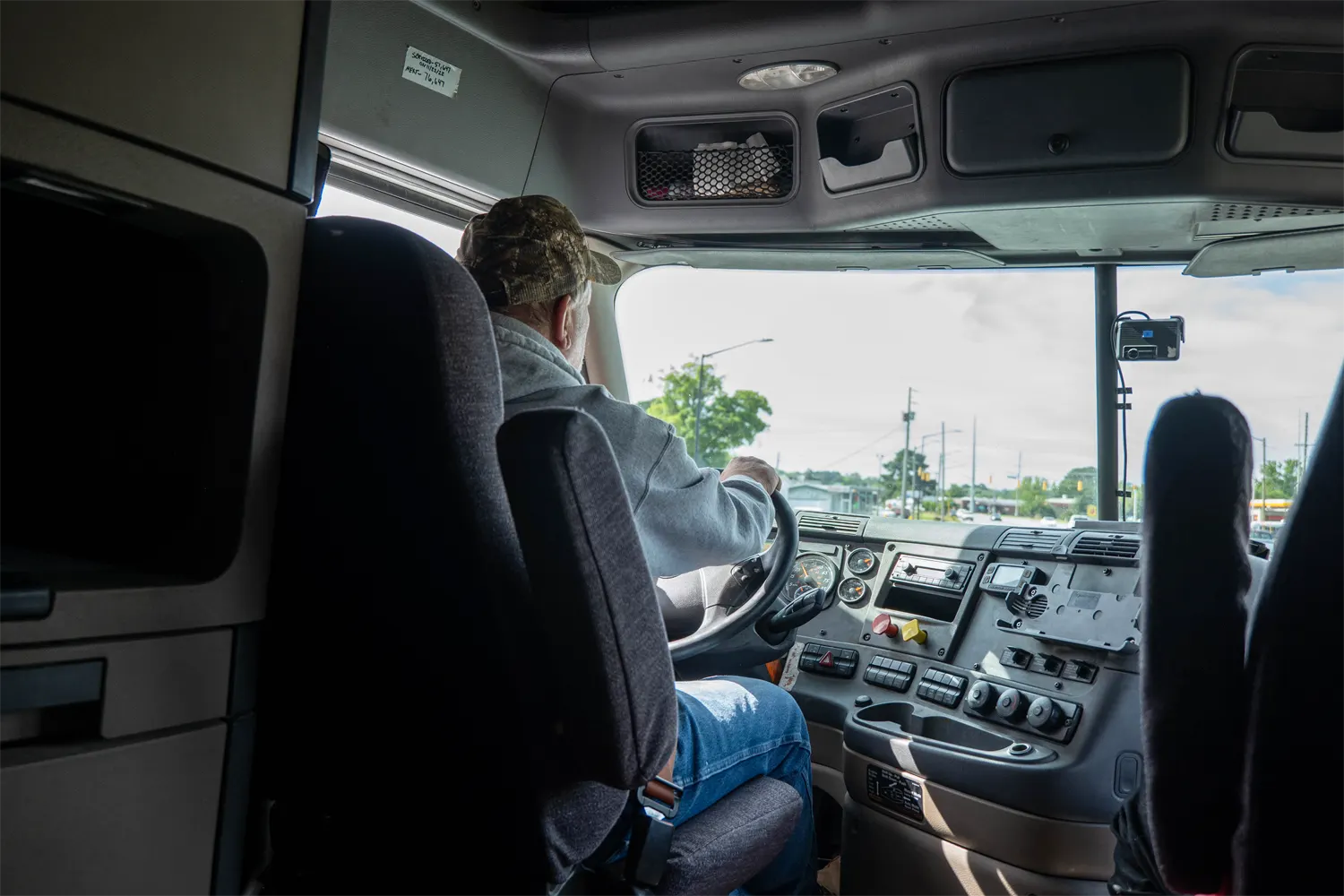
The most important cost of OTR driving is time away from home. Many OTR drivers stay out for two to three weeks at a time, then take a few days off at home. The exact schedule depends on the carrier. Drivers may end up missing some birthdays, ball games, and holidays.
Other challenges include:
- Life in a small space. The truck cab is the driver’s office, bedroom, and kitchen. Drivers learn to keep it clean and organized.
- Staying healthy. Long hours of sitting and consistently eating truck stop food make it easy for a driver’s health to decline over time. Drivers who pack meals, walk during breaks, and sleep on a schedule tend to feel better.
- Changing conditions. OTR drivers face snow in the Rockies, heat in the desert, and traffic in big cities, sometimes in the same week.
- Many drivers stay connected with family through phone and video calls during breaks.
The Benefits of OTR Driving
OTR driving gives new drivers something every carrier values: experience. Miles driven and a clean record are what open the door to local, dedicated, and specialty jobs later. Many local carriers prefer drivers with a year or more of experience, and OTR is often the fastest way to get it.
Other benefits include:
- Higher earning potential for new drivers, since pay grows with miles.
- Low living costs on the road. Drivers who live in the truck can save a large share of their pay.
- OTR drivers manage their own day on the road, from planning stops to choosing where to take breaks.
- Seeing the country. OTR drivers travel through states and landscapes most people only get to see in photos.
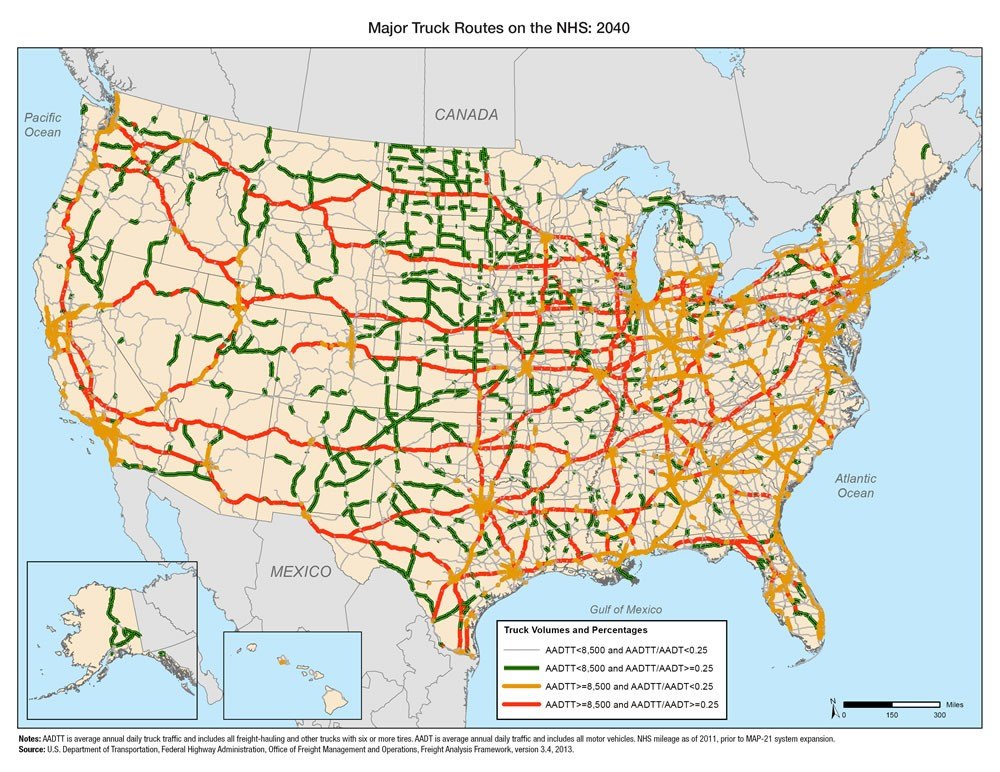
Map: Major Truck Routes on the National Highway System, 2040 (projected). Source: U.S. Department of Transportation, Federal Highway Administration, Freight Analysis Framework v3.4, 2013
Types of OTR Trucking Jobs
OTR jobs differ by the kind of trailer and freight. Each type requires different skills and offers a different kind of workday.
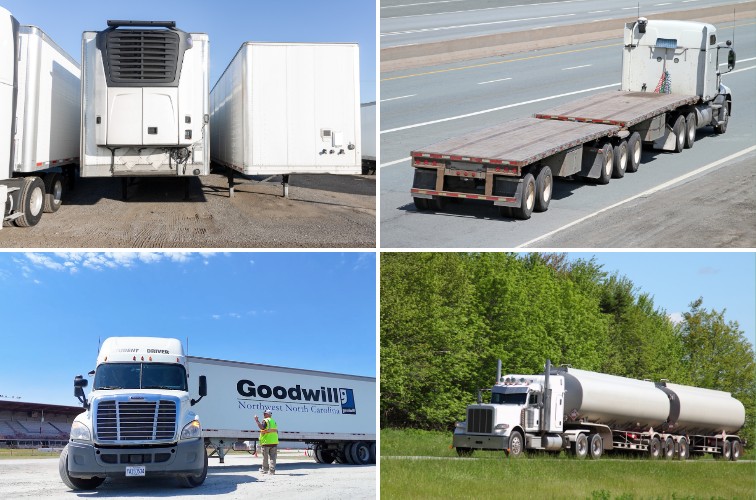
- Dry van: Drivers haul boxed or packaged goods in an enclosed trailer. Most dry van loads are “no touch,” meaning the driver does not load or unload. This is the most common starting point for new drivers. Carriers such as Schneider National, Werner, and Swift hire new drivers for this work.
- Refrigerated: Drivers haul food, medicine, and other goods that must stay at a set temperature. Refrigerated truck drivers watch the trailer’s temperature and often deliver to grocery warehouses. Stevens Transport specializes in this freight.
- Flatbed: Drivers haul steel, lumber, machinery, and building materials on an open trailer. They secure every load with chains, straps, and tarps. Flatbed work is more physical and often pays more. TMC Transportation and Melton Truck Lines are known for flatbed freight.
- Tanker: Drivers haul liquids, such as food-grade products or fuel. A tanker endorsement is required, and hazardous loads also need a hazmat endorsement.
- Team driving: Two drivers share one truck and take turns driving while the other rests. The truck can keep moving almost around the clock, so teams cover more miles and often earn more.
What It Takes to Drive OTR
OTR drivers cross state lines, so they must meet federal rules for interstate drivers. The main requirements are:
- A Class A CDL. Tractor-trailer OTR jobs require a Class A CDL. Each state has its own steps to getting a CDL.
- Age 21 or older. Drivers must be at least 21 to drive across state lines. Drivers aged 18 to 20 can earn a CDL but can only drive within their home state.
- Entry-Level Driver Training (ELDT). First-time Class A applicants must complete training from a provider listed on the FMCSA Training Provider Registry. TransTech’s ELDT training meets this rule.
- A DOT medical card. Drivers must pass a Department of Transportation physical to show they are fit to drive.
- A clean record. Carriers check each driver’s motor vehicle record (MVR) and require a drug screen during hiring.
How TransTech Prepares Drivers for OTR
TransTech’s 4-week full-time Class A program covers the skills OTR drivers use every day. Classroom lessons include logbooks, route planning, and pre-trip inspections. Students then practice backing and turning during yard training and finish with on-the-road driving.
TransTech is a preferred training provider for several large OTR carriers, including Schneider National, TMC Transportation, Stevens Transport, Werner Enterprises, Swift Transportation, and Melton Truck Lines. Recruiters visit campuses each week, and the job placement team helps students compare carriers, pay, and home-time policies before they choose.
After graduation, new drivers complete orientation with the carrier that hires them. This usually includes 1 to 2 weeks of paid training before the driver starts a solo route.
Is OTR Trucking Worth It?
For drivers who can handle time away from home, OTR trucking is often the best way to start a career. It pays well for new drivers, builds experience quickly, and leads to more job choices later. Drivers who want to be home every night may be happier in local work, but many still start with a year or so of OTR.
The first step is a Class A CDL. TransTech offers training at campuses across North Carolina, South Carolina, and Georgia. Anyone interested can reach out and start working towards an OTR career as soon as possible.
Frequently Asked Questions
Do OTR truck drivers pay for their own fuel?
No, not as company drivers. The carrier pays for fuel and truck upkeep, while owner-operators who run their own business pay those costs themselves.
Do OTR truck drivers get benefits?
Yes, most full-time company OTR jobs include benefits such as health insurance and paid time off. The exact package depends on the carrier.
Do OTR drivers choose their own loads?
No, company drivers usually get load assignments from a dispatcher. The driver then plans the route, fuel stops, and breaks within hours-of-service limits.
Where do OTR drivers shower and do laundry?
Most large truck stops have private showers and laundry rooms for drivers. Many truck stop chains give drivers free shower credits when they buy fuel.
Can an OTR driver bring a pet or a passenger?
Sometimes. Many carriers allow pets or riders with approval, but each carrier sets its own rules and fees.
