

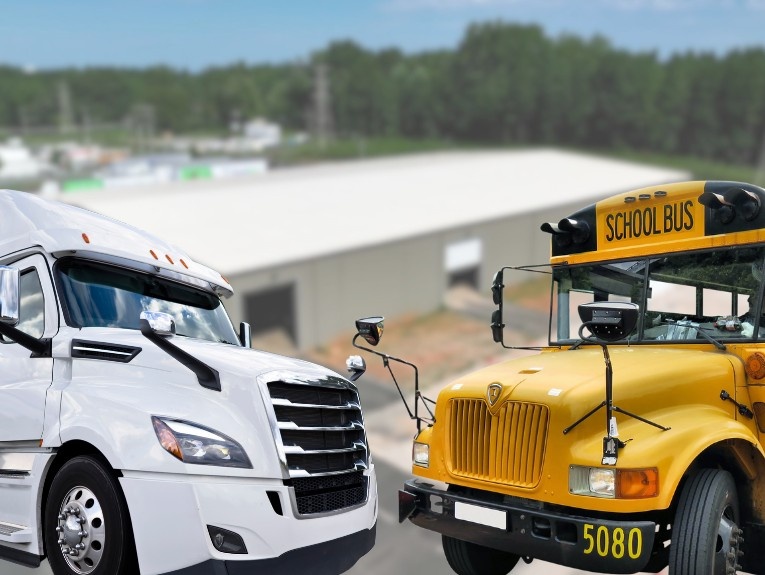
Both licenses open the door to a trucking career. But they lead to very different jobs, pay scales, and training paths.
A Class A CDL covers large combination trucks like semi-trucks and tractor-trailers. A Class B CDL covers single large vehicles like buses, dump trucks, and straight trucks. Class A training takes longer and costs more, but it opens higher-paying jobs and more career options. Class B training is shorter and leads to stable local jobs like bus driving and delivery work.
What’s in This Guide
- What a CDL is and who needs one
- What a Class A CDL covers
- What a Class B CDL covers
- Side-by-side comparison
- Jobs available with each license
- How to decide which is right for you
- Frequently asked questions
What is a CDL and Who Needs One?
A Commercial Driver’s License (CDL) is a special driver’s license required to operate large, heavy, or specialized vehicles for work. A regular driver’s license is not enough to drive a semi-truck or a city bus.
The Federal Motor Carrier Safety Administration (FMCSA) sets the rules for CDLs across the country. Every state follows these rules.
Most CDL jobs require at least a Class B. But if a student’s goal is long-haul trucking or working for a large freight company, Class A is the standard requirement in the industry.
What Does a Class A CDL Cover?
A Class A CDL allows someone to drive combination vehicles. A combination vehicle is one where a motorized truck (called a tractor) is connected to a separate trailer. Together, the truck and trailer have a Gross Vehicle Weight Rating (GVWR) over 26,001 pounds, and the trailer alone must weigh more than 10,000 pounds.
The most well-known Class A vehicle is the semi-truck, also called an 18-wheeler or tractor-trailer. These are the large trucks seen on highways hauling freight across the country.
Vehicles covered under a Class A CDL:
- Tractor-trailers (18-wheelers) and semi-trucks
- Flatbed trucks with a trailer
- Tanker trucks (with trailer)
- Livestock and double/triple trailers
- Any Class B or Class C vehicle
A Class A CDL holder can also drive Class B and Class C vehicles. This makes it the most flexible license in commercial driving.
What Does a Class B CDL Cover?
A Class B CDL allows someone to drive single large vehicles that weigh more than 26,001 pounds, or that tow a trailer weighing less than 10,000 pounds. These vehicles are not connected to a separate heavy trailer the way Class A trucks are.
Class B vehicles are often used for local and regional work. Bus drivers, garbage truck drivers, and cement truck drivers often hold Class B licenses.
Vehicles covered under a Class B CDL:
- City buses, school buses, and charter buses
- Dump trucks and garbage trucks
- Straight trucks (box trucks)
- Cement mixers and large delivery vehicles
- Some tow trucks
Important Distinction
A Class B holder can also drive Class C vehicles. But a Class B holder cannot drive Class A combination vehicles. That requires a Class A CDL.
Class A vs. Class B: A Direct Comparison
| Category | Class A CDL | Class B CDL |
| Vehicle type | Combination vehicles (tractor + trailer) | Single heavy vehicles, small trailers |
| Weight threshold | GCWR over 26,001 lbs; trailer over 10,000 lbs | GVWR over 26,001 lbs; towing under 10,000 lbs |
| Typical training length | 3 to 7 weeks (full-time programs) | 2 to 4 weeks (full-time programs) |
| Average starting pay | $55,000 to $70,000/year entry-level | $40,000 to $55,000/year entry-level |
| Experienced driver pay | $75,000 to $90,000+/year | $50,000 to $65,000/year |
| Work schedule | Often over-the-road; time away from home | Mostly local; home most nights |
| Can drive Class B vehicles? | Yes | Yes |
| Can drive Class A vehicles? | Yes | No |
| Job market demand | Very high | High |
| Common endorsements needed | Hazmat, Tanker, Doubles/Triples | Passenger (P), School Bus (S), Air Brakes |
What Jobs Are Available With Each License?
Class A Jobs
- OTR (long-haul) driver — hauls freight across multiple states; may be gone days or weeks
- Regional driver — covers a set area; usually home on weekends
- Local driver — delivers freight within one area; home nightly
- Flatbed driver — hauls construction materials, steel, or machinery
- Tanker driver — transports liquids or gases; requires Tanker endorsement
- Hazmat driver — hauls hazardous materials; one of the highest-paying CDL jobs
- Owner-operator — owns their truck and runs an independent business
Class B Jobs
- Bus driver — city transit or charter; requires Passenger (P) endorsement
- School bus driver — requires Passenger and School Bus (S) endorsements plus background clearance
- Dump truck driver — common in construction and excavation
- Garbage truck driver — consistent local routes; many government positions available
- Box truck / straight truck driver — local delivery for moving companies or distributors
- Cement mixer driver — construction industry; drives to job sites
Which License is Right for You?
There is no single right answer for every person. The best choice depends on what kind of work someone wants to do, how much time they can spend away from home, and what career goals they have in the long run.
A simple way to think about it:
Class A may be the better fit if…
- The goal is to drive a semi-truck or 18-wheeler
- Higher pay is the priority
- Being on the road and traveling is appealing
- The plan is to become an owner-operator someday
- Maximum flexibility and job options are important
- Working for a major freight or logistics company is the goal
Class B may be the better fit if…
- Being home every night is important
- Driving a bus or working in transit is the goal
- A shorter, less expensive training path is needed
- Working for the city, county, or school system is appealing
- Consistent hours and predictable routes are preferred
- The plan is to stay in one region long-term
If there is any doubt, Class A is typically the more flexible long-term choice. It opens more doors and does not close off Class B work. The reverse is not true.
Now that you know the difference between Class A and B CDLs, you may still be wondering…
Frequently Asked Questions
Can I upgrade from a Class B to a Class A later?
Yes. A Class B CDL holder can upgrade to a Class A by completing Class A ELDT training and passing the Class A CDL skills test. Some previous training hours may be credited, depending on the school and state.
Is Class A training harder than Class B?
Class A training involves more complex vehicle handling because students are learning to manage a connected trailer. Backing, turning, and coupling/uncoupling a trailer adds steps that are not part of Class B training. Most students find it manageable with practice, but it does require more behind-the-wheel time to feel comfortable.
Do I need a CDL to drive a box truck?
It depends on the weight of the truck. Vehicles under 26,001 pounds do not require a CDL. Many rental trucks and delivery vans fall below this threshold. But larger commercial straight trucks (box trucks) used for professional delivery or moving work often exceed that weight, requiring at least a Class B CDL.
Ready to Start Your CDL Training?
TransTech offers both Class A and Class B CDL programs. Admissions advisors can walk through the options and help find the right fit.
